
Only worship free from ostentation and hypocrisy is accepted in the Divine Court
True sacrifice means surrendering one’s ego, desires, and personal interests for the sake of Allah
The spirit of selflessness and sacrifice is the foundation of the progress and dignity of nations: Founder and Patron-in-Chief of Minhaj-ul-Quran
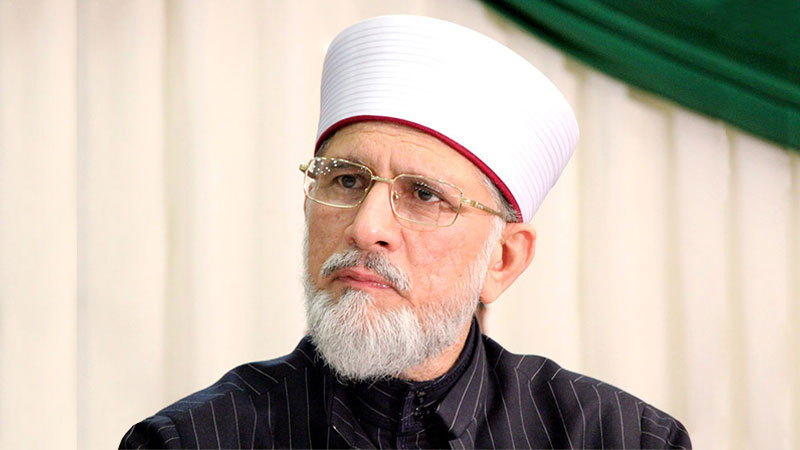
Shaykh-ul-Islam Dr. Muhammad Tahir-ul-Qadri, Founder and Patron-in-Chief of Minhaj-ul-Quran International, stated that Hajj and sacrifice are two great acts of worship whose acceptance depends entirely upon sincerity of intention. He said that intention is the soul of all acts of worship, and if any deed is tainted with showmanship, hypocrisy, or ostentation, it is not accepted by Allah Almighty.
He said that as preparations for sacrifice in the way of Allah are underway these days, every Muslim should examine their heart and reflect on whether their sacrifice is purely for the pleasure of Allah or merely a social custom and display for society. In Islam, sacrifice is not merely the slaughtering of an animal; rather, it is a practical expression of loyalty, obedience, selflessness, and complete submission to one’s Lord.
Shaykh-ul-Islam Dr. Muhammad Tahir-ul-Qadri said that the philosophy of sacrifice is derived from the great example of Prophet Ibrahim (peace be upon him) and Prophet Ismail (peace be upon him). When, in obedience to Allah’s command, a father resolved to sacrifice his beloved son, and the son submitted with patience and complete willingness, Allah Almighty transformed this spirit of sincerity into an act of worship for all generations to come.
He further stated that sacrifice teaches humanity that true servitude lies in sacrificing one’s desires, personal interests, pride, and ego before the pleasure of Allah Almighty. The Holy Qur’an clearly states that neither the meat nor the blood of sacrificial animals reaches Allah; rather, what reaches Him is the piety, sincerity, and righteous intention of His servants. Therefore, the real objective of sacrifice is to cultivate piety, fear of Allah, and spiritual purity within the hearts.
Dr. Qadri added that sacrifice is not merely an individual act of worship but also a profound lesson in collective welfare, social compassion, and human brotherhood. By distributing sacrificial meat among the poor, needy, orphans, and underprivileged members of society, Islam promotes equality, love, and fraternity so that the joys of Eid are not confined to only a few households but are shared by the entire community.
Shaykh-ul-Islam Dr. Muhammad Tahir-ul-Qadri remarked that history bears witness that only those nations attain honor, progress, and greatness which rise above personal interests and embrace the spirit of collective welfare, selflessness, and sacrifice. He said that Islam itself rose to prominence in the world on the foundations of these noble principles of patience, loyalty, and sacrifice.


Comment