
Serial No: 739
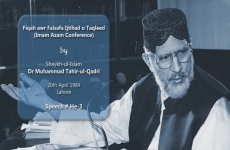
Speech No: He-9
Place: Markazi secretariat, Lahore
Dated: April 22, 2007
Category: Falsfa-e-Ijtihad-o-Taqleed
Speech By: Shaykh-ul-Islam Dr Muhammad Tahir-ul-Qadri
Description:
In this video, Shaykh-ul-Islam Dr Muhammad Tahir-ul-Qadri explains the concepts of Fiqh, Ijtihad, and Taqlid with scholarly depth and intellectual clarity. The video highlights that Fiqh represents the practical understanding of religion, Ijtihad is the scholarly effort to derive guidance from the Qur’an and Sunnah for new circumstances, and Taqlid is the structured reliance on qualified scholarship for practicing Islam correctly. Dr Tahir-ul-Qadri emphasizes that Ijtihad and Taqlid should not be viewed as opposing concepts, but as interconnected principles within the Islamic legal tradition. The video further explains the importance of classical juristic scholarship, the contributions of the great Imams, and the continuity of Islamic legal methodology. This video is highly beneficial for students, researchers, and anyone seeking to understand Islamic jurisprudence, legal reasoning, and the intellectual foundations of Islamic law.
In this video, Shaykh-ul-Islam Dr Muhammad Tahir-ul-Qadri explains the concepts of Fiqh, Ijtihad, and Taqlid with scholarly depth and intellectual clarity. The video highlights that Fiqh represents the practical understanding of religion, Ijtihad is the scholarly effort to derive guidance from the Qur’an and Sunnah for new circumstances, and Taqlid is the structured reliance on qualified scholarship for practicing Islam correctly. Dr Tahir-ul-Qadri emphasizes that Ijtihad and Taqlid should not be viewed as opposing concepts, but as interconnected principles within the Islamic legal tradition. The video further explains the importance of classical juristic scholarship, the contributions of the great Imams, and the continuity of Islamic legal methodology. This video is highly beneficial for students, researchers, and anyone seeking to understand Islamic jurisprudence, legal reasoning, and the intellectual foundations of Islamic law.




Comment