
Speech No: Hh-35
Place: Karachi,
Dated: September 29, 2024
Category: Islam ka Tasawur-e-Riasat
Speech By: Prof Dr Hassan Mohi-ud-Din Qadri
Description:
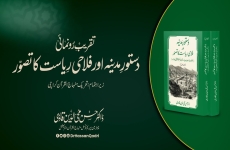
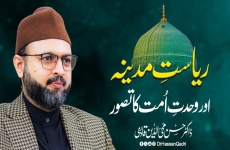
In this insightful address delivered in Karachi, Dr. Hassan Mohiuddin Qadri explores the Constitution of Medina and its relevance to the modern concept of a Welfare State. He explains that the Constitution of Medina was the first written constitution in human history, establishing a welfare-based society founded on justice, equality, religious freedom, human dignity, social protection, and state responsibility. Dr. Hassan Qadri highlights that Islam introduced the true concept of a welfare state, where the role of the state goes beyond governance to include social justice, protection of vulnerable communities, economic fairness, education, healthcare, and public welfare. He emphasizes that a genuine welfare state—guided by the principles of the Constitution of Medina—must uphold rule of law, transparency, accountability, and service to humanity. The lecture further explains that many modern ideas of democracy, human rights, and social welfare are deeply aligned with the principles established in the State of Medina, and that applying these principles today can lead to peace, stability, and sustainable development. This video is an essential resource for anyone seeking to understand Islamic constitutional thought, welfare governance, and the timeless model of the State of Medina.
In this insightful address delivered in Karachi, Dr. Hassan Mohiuddin Qadri explores the Constitution of Medina and its relevance to the modern concept of a Welfare State. He explains that the Constitution of Medina was the first written constitution in human history, establishing a welfare-based society founded on justice, equality, religious freedom, human dignity, social protection, and state responsibility. Dr. Hassan Qadri highlights that Islam introduced the true concept of a welfare state, where the role of the state goes beyond governance to include social justice, protection of vulnerable communities, economic fairness, education, healthcare, and public welfare. He emphasizes that a genuine welfare state—guided by the principles of the Constitution of Medina—must uphold rule of law, transparency, accountability, and service to humanity. The lecture further explains that many modern ideas of democracy, human rights, and social welfare are deeply aligned with the principles established in the State of Medina, and that applying these principles today can lead to peace, stability, and sustainable development. This video is an essential resource for anyone seeking to understand Islamic constitutional thought, welfare governance, and the timeless model of the State of Medina.












Comment