
The Concept of the Science of Management Did Not Originate in the West; It Is a Central Theme of the Holy Qur’an
A Leader Can Never Be Oppressive or Narrow-Minded; True Leadership Is Compassionate and Just

Chairman Supreme Council of Minhaj-ul-Quran International, Professor Dr. Hassan Mohi-ud-Din Qadri, has stated that anyone seeking to embody the true qualities of leadership must strengthen their connection with the Holy Qur’an and the Seerah of the Holy Prophet Muhammad ﷺ.
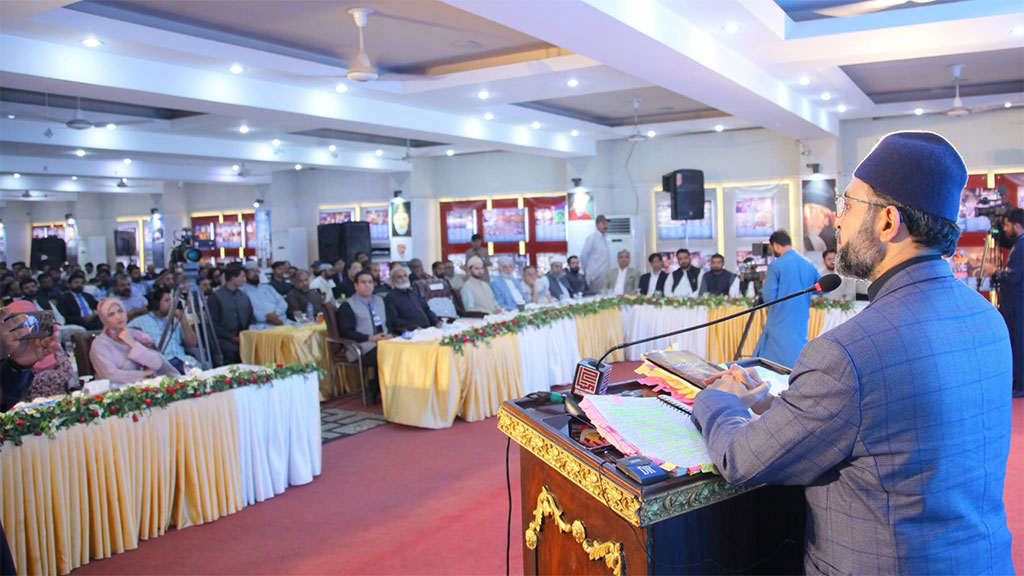
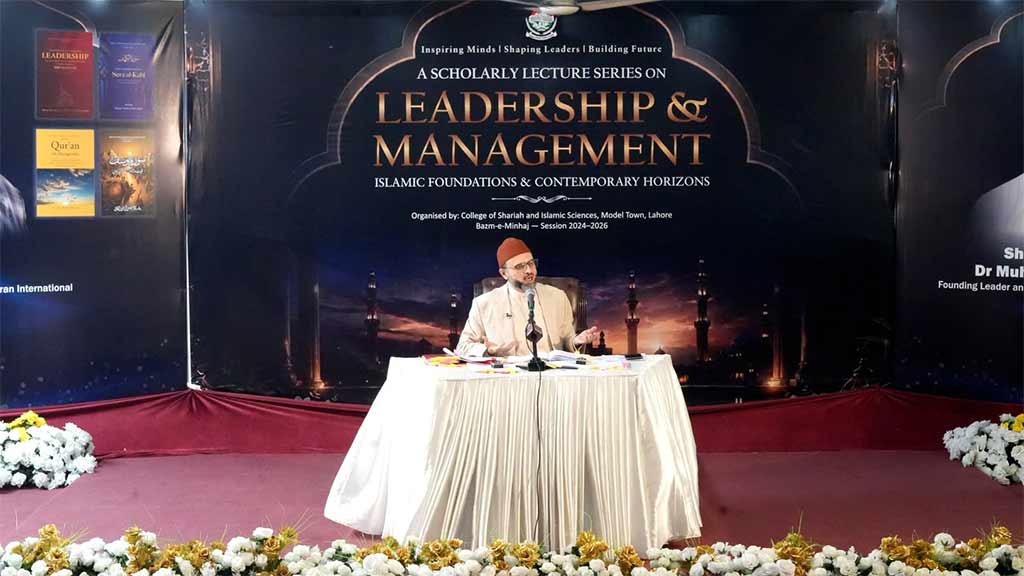
He expressed these views during the concluding lecture of his series on Leadership and Management, delivered at a special intellectual session organized by the College of Shariah and Islamic Sciences.
Prof. Dr. Hassan Qadri remarked that from the very beginning of human creation, the sciences of leadership and management have been essential human needs. He emphasized that the concepts of leadership and management are neither Western nor modern inventions; rather, they are fundamental themes of the Holy Qur’an. He said that every verse of the Qur’an imparts lessons in leadership and management and bears witness to the perfection of Divine governance and organization.
He explained that management is the process of restoring order to what has become disordered. The Qur’an, he said, places particular emphasis on the servant-leadership model. A true leader does not merely issue commands; rather, he demonstrates compassion, responsibility, empathy, and justice. A leader must first be an effective manager of his own life. One who is personally disorganized and scattered cannot effectively fulfill responsibilities or organize others.
He further stated that a leader possesses a clear vision of both the destination and the path leading to it. When a nation is lost in heedlessness, it is the leader who remains awake and vigilant. One of the defining characteristics of a leader, he noted, is that he does not follow brands—he becomes a brand through his own actions and character.
Addressing the students, Prof. Dr. Hassan Qadri advised them not to imitate foreign cultures and lifestyles blindly. Instead, they should strive to reflect the character, values, and conduct of the Holy Prophet ﷺ in their lives and become role models themselves. He said that a genuine leader builds his own world, neither violating principles of originality nor falling victim to plagiarism and imitation.
“A leader is not the ruler of a throne but the sovereign of hearts,” he remarked. “A true leader feels the pain of others as if it were his own. No narrow-minded or petty person can become a leader. A leader derives joy from the happiness of others and smiles when he sees smiles on the faces of people. His presence brings comfort, healing, and hope.”
He added that through sincerity, insight, and deep observation, a leader can often discern the condition of a person’s heart simply by looking at their face. More importantly, a true leader does not merely recognize people’s difficulties but strives to alleviate them.
Prof. Dr. Hassan Qadri emphasized that Allah Almighty has entrusted every individual with a sphere of influence in which they are a leader. Leadership responsibilities extend from the home to society at large. Even if a person influences only a few individuals, they bear the responsibility of leadership. Such responsibility requires listening attentively to others, consulting them, and consistently adopting a just and compassionate approach.
He encouraged students to discover and develop their creative potential and leadership abilities. To refine their leadership qualities, he advised them to cultivate a love for humanity, pursue knowledge passionately, and seek the company of learned and righteous people.
The intellectual session was attended by Khurram Nawaz Gandapur, Secretary General of Minhaj-ul-Quran International; Dr. Mumtaz-ul-Hasan Barvi, Principal of the College of Shariah and Islamic Sciences; Wing Commander (R) Muhammad Abdul Ghaffar; Dr. Muhammad Rafiq Najm; Rana Muhammad Idrees; Dr. Rana Muhammad Akram; Professor Muhammad Nawaz Zafar Chishti; Jawad Hamid; Brigadier (R) Umar Hayat; Colonel (R) Khalid Javed; Allama Ain-ul-Haq Baghdadi; Mazhar Mahmood Alvi; Allama Shabbir Ahmad Jami; Dr. Syed Iftikhar Bukhari; Allama Mohibullah Azhar; Lubna Mushtaq; Durrah Al-Zahra; Ayesha Mubashir; as well as students of the College of Shariah and Islamic Sciences and Minhaj College for Women.




Comment